

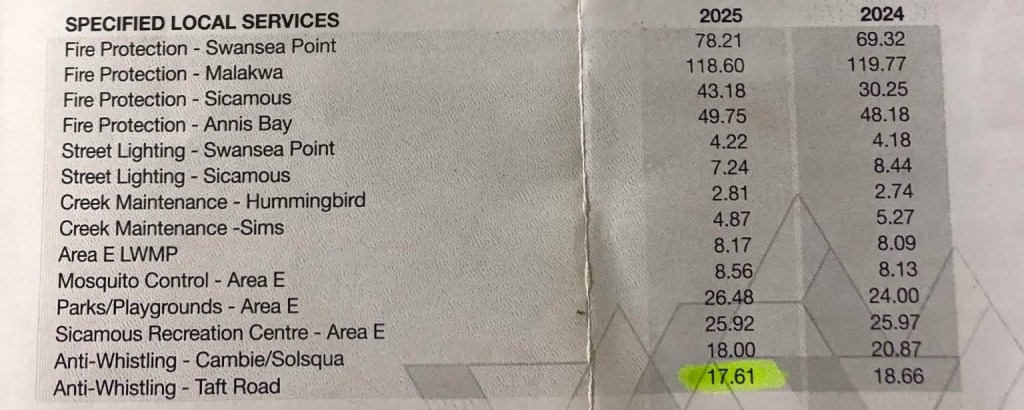
Malakwa, BC -Sept 5th 2026
Local homeowners are left paying the literal price for peace and quiet as the Columbia Shuswap Regional District navigates the baffling reality of the local “whistle tax.” While Cambie Solsqua residents simply want a full night’s sleep without a 2km long freight train shattering the silence. The true blame for this financial headache lies not with the CSRD, but with a 19th-century British engineer, reckless corporate train conductors, and an exploitative insurance racket. Ultimately, it serves as just another glaring example of how major corporations weaponize our own government regulations to subjugate working class communities to engineered, ever rising inflation.
Blame George Stephenson and a Drunk Guy in a Buggy
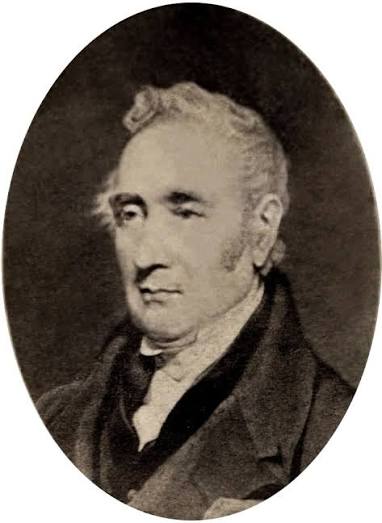
The entire global train horn predicament is fundamentally the fault of George Stephenson. In 1833, Stephenson’s locomotive “Samson” collided with a horse and cart at a crossing in England resulting in the loss of 80 dozen eggs and 50 pounds of butter. Rather than concluding that the cart driver who was almost certainly heavily intoxicated and entirely oblivious to his surroundings should have simply looked both ways before steering his horse onto the track, Stephenson decided to commission a musical instrument maker to equip a steam powered trumpet onto the boiler.
Almost 200 years later, public property owners in modern British Columbia are legally forced to absorb thousands of dollars in municipal infrastructure costs to silence Stephenson’s “innovation”.
A Useless Code for a Queen We Don’t Even Have
To make matters more absurd, the exact sequence engineers are legally mandated to blast at every single crossing is completely obsolete. The standard pattern—two longs, one short, and one long blast was universally adopted because it represents the letter “Q” in Morse code. Legend has it this sequence is a historical leftover from 19th-century maritime law, which required ships to clear the way whenever a vessel carrying the Queen of England was passing through.
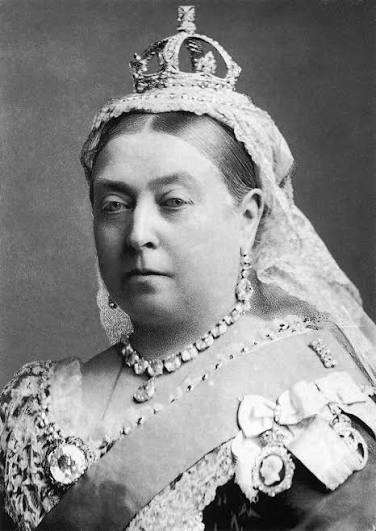
The logic falls apart instantly on land. First of all, who on modern roads even understands maritime law? Second, a train is a land-based vehicle; applying deep-sea naval rules to a standard public road intersection is entirely useless. Finally, why should anyone in the Shuswap valley have to yield the right-of-way to a 19th-century monarch? We don’t even have a Queen anymore. Canada technically has a King now, and nobody in rural B.C. is checking his royal travel itinerary before driving across the train tracks. Conductors are effectively screaming a dead telegraph language at 110 decibels into the midnight air to honor a defunct naval rule for a monarch who isn’t even on the throne. Based on our research, we found modern railroaders will adamantly deny these origins to save face.
Zero Local Benefit: The Express Paradox
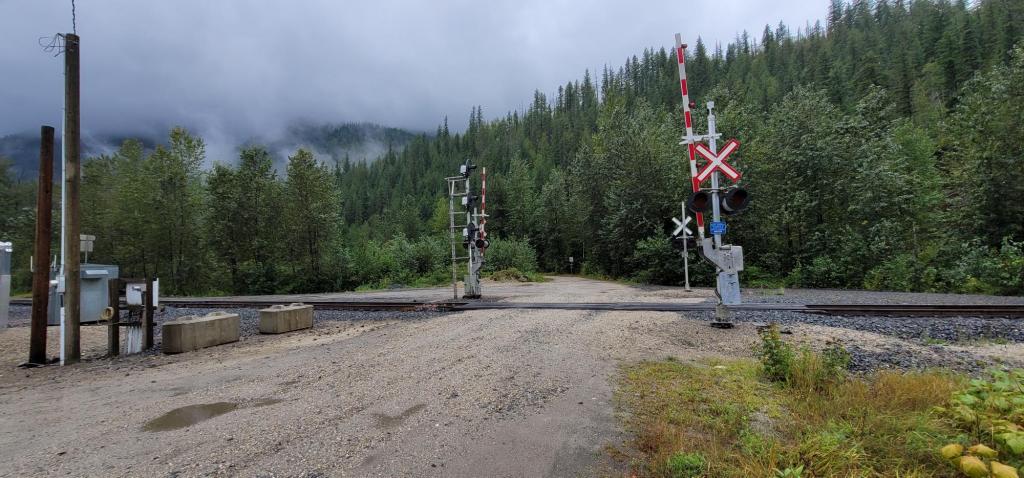
What makes the auditory assault truly agonizing is that the train doesn’t even stop here. The thunderous CPKC freights do not stop in Taft, they do not stop at Cambie Solsqua, and they provide absolutely zero logistics, or economic benefit directly to the residents. In lieu of benefits, local neighborhoods are forced to endure the bone-rattling noise and safety liabilities exclusively to benefit corporate supply chains in Vancouver or Calgary. Shuswap residents bear 100% of the acoustic pollution so that consumers hundreds of kilometers away can get their shipping containers on time.
The Cost of Silence: By the Numbers
Achieving a federally sanctioned Transport Canada whistle ban is not a blanket request, it is a hyper localized property tax nightmare. The District’s safety audits laid out the exact real estate math of peace and quiet along the corridor:
The Taft Five: Around the crossing at historic Taft, exactly five properties shoulder the geographic burden and logistical anxiety of funding constant warning time track electronics to silence the passing horns.
The Cambie Solsqua Nine: Further down the line, a cluster of nine properties face the compounding infrastructure costs required to upgrade safety boundaries near Cambie Solsqua Road.
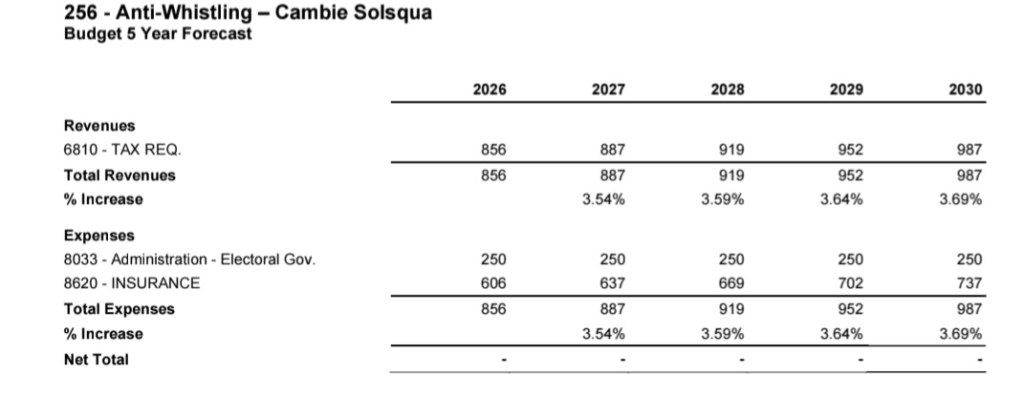
The Silver Sands Exception
The absurdity of the “whistle tax” system became explicitly clear when looking at Silver Sands Road. While the District explored expanding the whistle cessation project for residents, the financial numbers simply flatlined.
Because the strict, localized funding formula would have forced an astronomical tax hike on a tiny handful of households, the District ultimately did not go ahead with the whistle tax initiative for the Silver Sands crossing. As a result, the residents of Silver Sands Road will keep their money, but they will also keep the standard, unwanted midnight Morse code wake up call.
The Personal Insurance Wall & Crossing Costs
The financial math gets even more unfair when you look at the everyday bills these residents already pay. The property owners in these zones already pay handsomely for their own home insurance, and they fork over money for their automotive insurance. Yet, if you ask either of those insurance providers to shield you from the financial liabilities of a multi-ton locomotive running a few meters from your bedroom or your driveway, they completely refuse. They won’t cover a dime related to the railway.
To see how backwards this is, consider a standard public road intersection. Imagine if a commuter regularly drove their car at near lethal speeds, 35km/h through a local crossroad, claiming that the only way they could safely cross without hitting anyone was to blast their car horn at 110 decibels in Morse code fashion signaling “Make way for the Queen!” It would just be better this way, they might say. We would save so much money. If people nearby didn’t like it, we could force them to pay for the upgrades to infrastructure to silence nearby drivers.
Common sense dictates that the ongoing maintenance, safety gates, and liability costs of a public rail crossing should be distributed evenly across all drivers who utilize the public roads, people who receive benefits from rail transportation networks, as well as CPKC and provincial infrastructure budgets. Instead, the current bureaucratic framework isolates the financial burden, pinning the bill directly to the tiny handful of local residents who just happen to live near the intersection. When you isolate small sections of the population, it becomes much easier to extort them with sound in an effort to force them into taking over rail crossing maintenance.
The Insurance Racket: Corporate Double-Dipping
Stephenson created the noise, and along with the CPKC, modern insurance corporations have weaponized it into a cash grab. By law, silencing a train horn shifts 100% of the accident liability away from the railway and onto the District.
Corporate underwriters are explicitly double-dipping on this arrangement. They happily collect massive, multimillion dollar commercial premiums from CPKC Rail to cover mainline operations, while simultaneously padding their auto and home insurance portfolios. This is all happening right before they turn around and slap local residents with a secondary municipal “whistle tax” premium for the exact same stretch of roads. Maybe it’s time some of the onus of insuring safety falls on them, rather than just profiting off the risk.

Systematic Exploitation and Corporate-Driven Inflation
To wrap the absurdity in a final layer of corporate greed, these community-funded municipal safety premiums behave just like standard home insurance policies. It is a rigged system of globalized collective punishment. Just like how an overflowing river in High River, Alberta causes home insurance rates to spike for completely unaffected property owners across the country, a horrific railway disaster or derailment will be used by underwriters to retroactively jack up the local “whistle tax” safety premiums right here in B.C.
Worse still, residents are being forced to financially insure against the reckless near misses of CPKC train conductors. When a multi-ton freight train speeds through the valley, any operational error, delayed reaction, or failure to properly observe the line by the rail operators becomes a legal liability shifted entirely onto the local community’s ledger the second the horn is silenced. They’ve removed the need to conduct themselves safely.
The resulting “whistle tax” acts as an artificially inflated cost of living, squeezing the working class under the guise of federally mandated public safety. Local property owners are effectively paying out of pocket to give a multibillion dollar rail monopoly a free pass for their own mistakes. Until the insurance companies stop double-dipping, or until George Stephenson apologizes from the grave, the “Cost of Silence” will remain the most expensive piece of invisible infrastructure the Shuswap has ever had to buy.
See Also:
Sicamous, BC – August 27th 2026
Sicamous, BC – August 26th 2026
 sicamouslocalnews.ca