

October 28th 2026 – Sicamous, BC
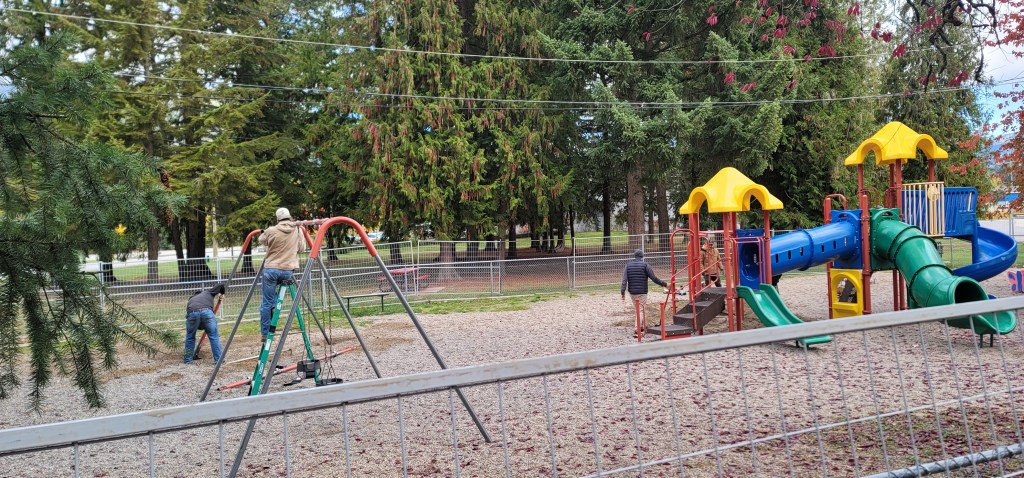
Between the collective twelve members of our staff, we drive by the playground at Finlayson Park at least 24 times a day. We are not going to lie. From the street, a good thirty metres away, it looked like the playground was in great shape. Granted, looking from the road while driving by in a car up to thirty kilometres an hour makes it hard to spot rust, chipped paint, or worn materials, but the vibe totally seems fine.
So why exactly does a municipality just decide to drop 140,000 dollars on a new playground?
Apparently, there is some sort of standard dictating the safe life of a playground called CAN/CSA-Z614. If you have ever been a labourer on a construction site, you probably know that anything starting with “CAN/CSA” is something you can usually ignore, assuming no one is going to do anything about it. With this sentiment in spirit, we did not bother to actually read the standard. We are sure it says something along the lines of a manufacturer’s guarantee of safe life being important.
How long is that safe life? Around 15 to 20 years. We didn’t look up the specific make and model installed at Finlayson, but we do know it is over 25 years old. With this in consideration, you could say the town has been rolling the dice. It has gone well so far. Perhaps we should roll them a couple more years to save a few bucks?
When the playground clearly still looks great, what exactly is it that has caused it to reach the end of its lifespan? Well, they get metal cancer. The material used to form the skeleton frame of the playground is hollow. Probably intentionally, manufacturers leave small gaps for water to seep in, and it gets trapped inside. Again, we did not actually look inside any of the metal tubing, but we are told playground infrastructure rusts from the inside out.
We figured, why not just send maintenance crews around to give all the metal poles a little tappy-tappy with a hammer? That would allow us to confirm if the metal is solid or just a slick layer of paint. Unfortunately, that type of assessment does not meet CAN/CSA standards and requirements of due diligence.
Even if it did, there is the issue of evolving safety standards that have changed since the playground’s first installation back in 1998. From what we understand, there are standards regarding head entrapment prevention, as well as fall impact reduction. The true robber baron inside of us did not think we needed to take these standards seriously, so we asked: pfft, what is the worst that could happen? Back in the day, major infrastructure projects like playgrounds included the cost of deaths in the budget. Couldn’t we just budget for casualties and fatalities?
There have been several documented cases of municipalities neglecting playground maintenance because there is money to be saved by life-maxing a park. But under provincial laws like the Occupiers’ Liability Act, municipalities have a strict duty of care to ensure public spaces are reasonably safe. While courts agree that towns are not expected to guarantee perfection, they face heavy liability if injuries are caused by unaddressed structural defects, inadequate maintenance, or failing to meet modern safety codes.
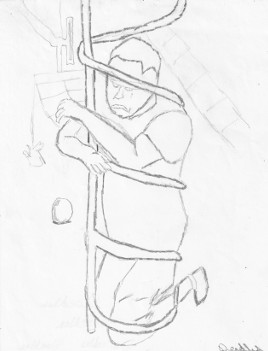
Playgrounds built 25 years ago frequently have small V-shaped gaps or top-of-slide seams that can catch a child’s drawstring, creating an invisible, severe strangulation risk while a child is sliding down. Which makes sense. A child should only ever get choked when doing so on purpose, while messing around with their friends. Don’t think about us like that. We grew up in the nineties. It was a thing back then, and we did not have Tide Pods to eat.
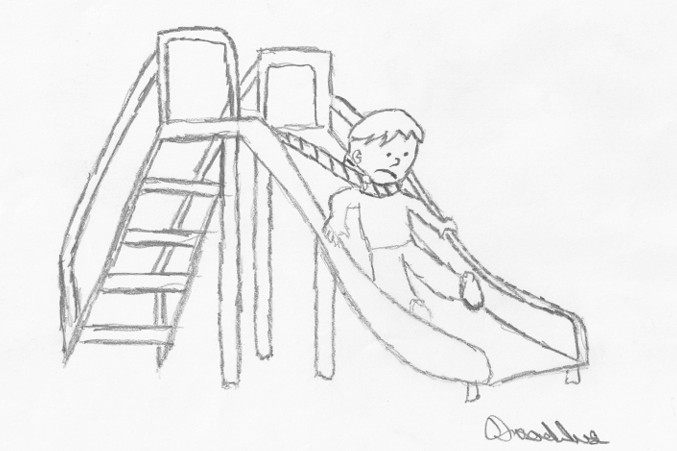
In addition to the choking rule, what was acceptable for height protection decades ago is a major liability today. Modern codes require specific barrier heights and protective guardrails on elevated platforms to prevent accidental falls. Older structures often have wide openings on high platforms that do not meet modern height-to-barrier ratios. To this, we would argue, how are you going to prove that the fall was not intentional? As far as our robber baron halves are concerned, all falls at a playground are intentional. Like they used to say: climb around and find out.
But apparently, over time, the impact of falls keeps getting worse. Over decades, old engineered wood chips or gravel ground covers break down, compact, and mix with dirt, broken glass and cigarette butts. Even if it looks like a nice bed of jagged rocks, the subsurface layer can become as hard as concrete, completely failing impact tests designed to prevent head injuries during a fall.
We admit all these things seem relatively valid, but what are the odds that any of this even happens? The robber baron says couldn’t we just wait until someone actually gets hurt or strangled? Wouldn’t we save money?
Canadian courts historically place strict limits on non-pecuniary damages. The death of a child is not a financial loss, and in British Columbia, wrongful death damages for a child historically ranged from 50,000 to 100,000 dollars. It seems like a potential savings for the community. Unfortunately, the Family Compensation Amendment Act of 2024 expanded the scope of damages, allowing courts to award much higher settlement amounts.
Even then, that is not the highest expense. The process of defending a catastrophic injury or death claim is a massive financial drain.
A fatal incident triggers immediate independent engineering analyses, forensic inspections of the equipment, and comprehensive risk management audits. Everyone’s going to need their cut. Total legal defense fees, expert witness costs, and court administration expenses can easily accumulate to anywhere between 100,000 and over 500,000 dollars over years of litigation.
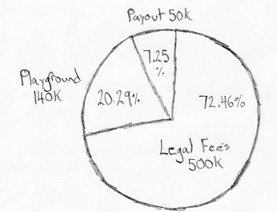
We know what you’re thinking: insurance covers all that, we’re in the clear aren’t we?
Municipalities are part of insurance pools, like the Municipal Insurance Association of British Columbia. A single major payout or a finding of severe negligence directly alters a municipality’s risk profile, leading to severe increases in annual liability insurance premiums that taxpayers must absorb for years. So depending on what generation you’re from, this might not be the solution. You might be thinking that we shouldn’t use insurance just to prevent our rates from going up. In addition to the rate hike, the municipality must also pay its deductible before insurance coverage kicks in, which can range from 10,000 to 250,000 dollars per occurrence depending on the size of the community and their specific policy.
This immense financial exposure, paired with the moral weight of public safety, is the primary reason why municipal insurers require strict adherence to safety standards and prompt decommissioning of non-compliant equipment. So to say, if we don’t replace the equipment, our insurer might not even cover us. Don’t get us started on the for-profit insurance model. There is something inherently immoral about corporations profiting off people’s fear that something absolutely devastating could happen to them, never mind swindling entire municipalities.
So let’s break it down:
- New playground: 140,000 dollars
- Incident covered by insurance: 10,000 to 250,000 dollars + 140,000 dollars for a new playground + potential fines (ya we forgot to mention fines until now)
- Incident not covered by insurance: 150,000 to 600,000 dollars + 140,000 dollars for a new playground + those same potential fines
So we all here think the choice is obvious: No More Playgrounds.
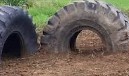
After all, they are only used by a very small (literally, they’re small people) portion of the population who also happens to not pay any taxes. The choice ultimately is ours: do we want the town to support these tiny freeloaders and budget for a new playground, budget for an inevitable playground-related lawsuit, or just scrap the whole idea of playgrounds altogether and scatter a bunch of old tractor tires all over the place.
Next:
Inaugural Sicamous Local News Halloween Awards Observed By Town
Sicamous, BC – November 1st 2026
Previous:
Terror In The Woods At Caravan Farm
Armstrong, BC – October 25th 2026
